Arrowhead is focusing on Helldivers 2 updates while a small team prototypes its next game. Johan Pilestedt says a sequel would risk splitting the community.

Arrowhead’s biggest challenge with a potential Helldivers 3 may be the success of Helldivers 2. The studio is keeping most of its staff on the current game and its future updates, while a small team prototypes another project. There’s no indication that the prototype is a sequel, so it shouldn’t be read as evidence that a third Helldivers is in development.
A sequel would have to justify starting over
The staffing choice points to a familiar tension in live-service games: a successful title can keep growing, but a sequel risks dividing the audience between two products. Arrowhead’s current approach puts its existing player community first. That means the immediate work is to keep the game receiving updates and give players reasons to return, rather than moving the studio’s attention toward a new installment.
Founder Johan Pilestedt has argued that a numbered follow-up could make players feel they’re starting over. Continuing to build on the existing game, by contrast, gives them a reason to stay invested in the world and community they already know. In an interview with Rock Paper Shotgun, he compared that ongoing commitment to hobbies such as Lego or Warhammer, where participation can continue through new additions rather than requiring people to abandon what they already own.
That comparison makes the studio’s position clearer. A game can become more than a sequence of missions if players build habits and social ties around it; updates then serve as invitations to keep participating. But the analogy has limits: a video game still depends on the studio to maintain and develop it. A community can help sustain interest, though it can’t replace the work of making new content.
Players are part of the product’s momentum
“We see players as the actual engine of the game,” Pilestedt said. He pointed to how players bring in friends, make memes and help keep the community active. “When you have an active community doing that, you don’t need a sequel.”
Here’s the thing: that claim describes a real source of value, but it also places a lot of weight on community activity. Players can create conversation and social momentum that a studio can’t manufacture on command. They can make a game feel present between updates. And yet, the studio still has to give those players something worth returning to.
For live-service games, that balance is difficult to maintain. Updates can renew interest, but they also create expectations about the pace and direction of support. If you’re working in this space, the practical question isn’t simply whether a game has an active audience; it’s whether the studio can keep serving that audience without exhausting its teams or making each update feel obligatory.
The sequel’s biggest competitor is the current game
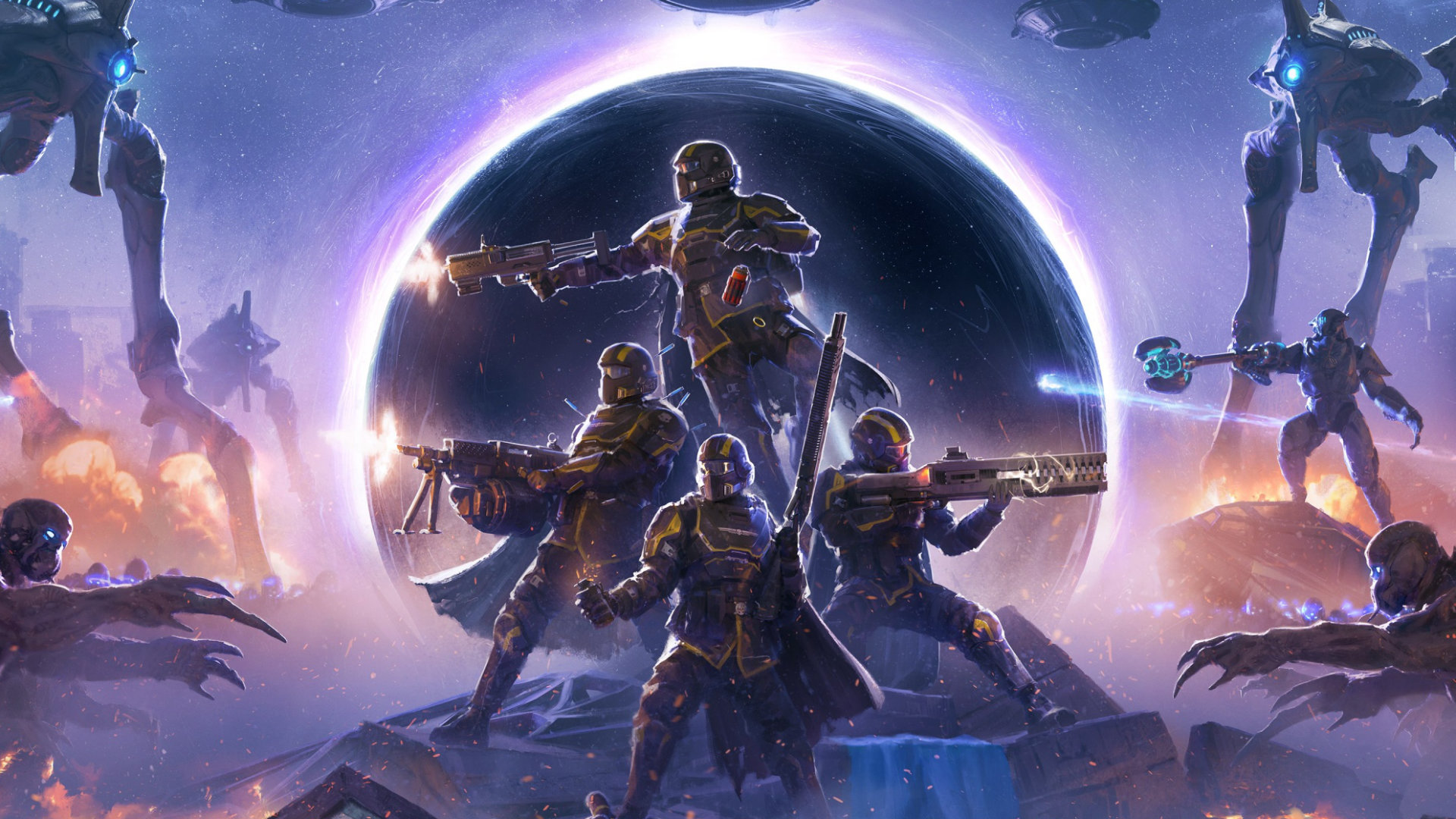
Pilestedt’s concern is that “the biggest competitor to a Helldivers 3 would be Helldivers 2.” The current game launched in 2024 and has continued to receive updates while maintaining a playerbase. A sequel could draw attention away from that ongoing effort, especially if players see the new release as a replacement rather than a distinct experience.
This is more significant than it looks. A sequel would need to offer enough new value to justify asking players to move on, while avoiding the impression that their investment in the existing game has been left behind. If the two games were different enough to coexist, the audience might not have to choose between them. But that would be a demanding creative and production challenge, and the interview doesn’t establish that Arrowhead has decided to pursue it.
My read is that Arrowhead sees more value in extending Helldivers 2’s run than asking its community to move on. That doesn’t settle what the studio will make next. It does explain why a prototype elsewhere in the company shouldn’t be treated as a sign that Helldivers 3 is imminent.
What the strategy asks of Arrowhead
That approach also avoids some pressure to scale a live-service game beyond what its audience can sustain, a problem that has affected other titles in the category. Keeping a game going still requires judgment: the studio has to decide which updates matter, how much staff to commit, and how to preserve players’ interest over time. The source doesn’t describe Arrowhead’s plans in those terms, but the trade-off is built into the strategy Pilestedt outlines.
There’s a risk in treating community enthusiasm as a substitute for a clear future. Players may be willing to stay, but they’ll still expect the game to evolve in ways that feel worthwhile. The harder task is maintaining that relationship without turning every new addition into a reason the previous one feels obsolete. A sequel could solve some creative problems while creating that very perception.
For now, the studio’s priority is clear: keep Helldivers 2 going, and let its players help shape what comes next. That’s a coherent choice, though it leaves the longer-term direction open. The prototype may lead somewhere else entirely. The sequel question remains just that: a question, not an announced plan.
The post Don’t expect a Helldivers 3 anytime soon first appeared on KitGuru.

Discussion
Sign in to join the discussion.