Jason Schreier says The Elder Scrolls VI remains more than two years from release, putting a rumored 2028 launch date in doubt.

A reveal without a release window
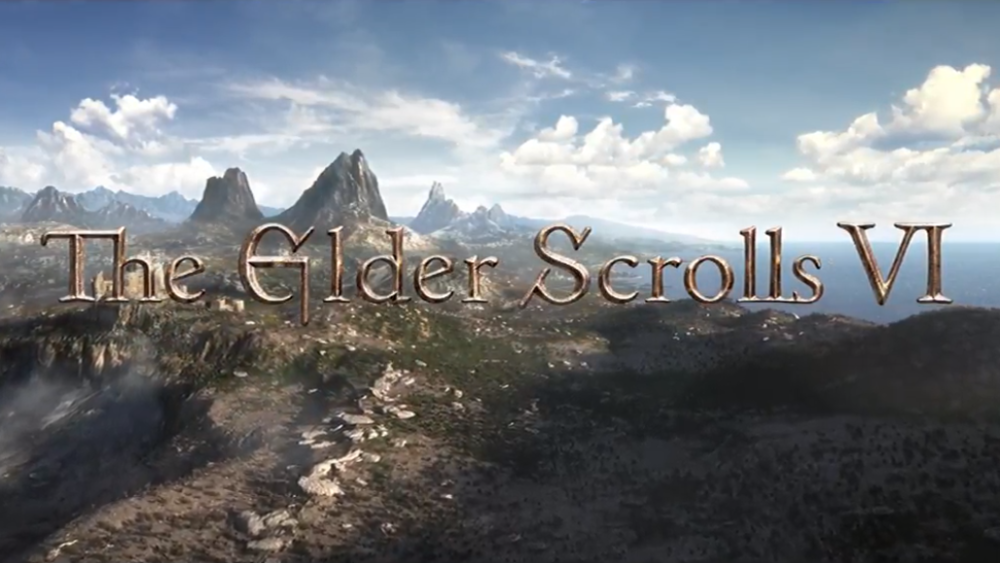
The Elder Scrolls VI’s latest reveal has offered little clarity on when Bethesda’s next RPG will arrive. Bloomberg reporter Jason Schreier says the game is still “more than two years away,” a timeline that could put a rumored 2028 release in doubt. That estimate is a useful reality check, but it isn’t a launch date: Schreier didn’t name a window, and the reveal itself appears to have supplied no new scheduling detail.
What Schreier’s estimate does—and doesn’t—say
Schreier’s estimate came in a Bluesky post responding to the announcement. He recalled that Bethesda unveiled The Elder Scrolls VI in 2018 alongside Starfield, when the studio was focused on Fallout 76. The teaser, he wrote, was meant to reassure fans that single-player games were still in development: “Don't worry, even though we're making a multiplayer game we've got single-player stuff coming too!” The context matters: the original announcement functioned partly as a message about Bethesda’s broader plans, rather than as a detailed introduction to a game ready for release.
“Sorry to say this game is still more than 2 years away!”, Schreier added. He gave no specific launch window, so the estimate doesn’t establish when the game will ship. Still, if it’s accurate, expectations for a 2028 release may be too optimistic. “More than two years” is a broad estimate, and it can’t distinguish between a game that’s just beyond that threshold and one that remains much further out.
That distinction is easy to lose when a brief post gets turned into a firm prediction. A reporter’s estimate can inform expectations, but it doesn’t replace a public schedule from the developer. The available information leaves room for uncertainty about development progress, release timing, and what Bethesda intends to show next.
A familiar problem with early game announcements
Long gaps between an announcement and a release create a particular challenge for game studios. A teaser can confirm that a project exists and reassure an audience, but it may say little about its design, scope, or readiness. When the first public glimpse is mostly a logo, fans are left to attach their own expectations to a title that the studio hasn’t yet explained in detail.
That can make every later appearance feel more consequential than it is. A new logo or brief acknowledgement may renew attention without answering the questions players actually have: what the game is, how it’s changing, and when it might be playable. Here’s the thing: visibility isn’t the same as progress information. A reveal can be newsworthy while leaving the underlying uncertainty untouched.
Bethesda’s 2018 teaser also illustrates how announcements can serve more than one purpose. As Schreier recalled it, the message was partly intended to assure fans that single-player projects remained in development while the studio was working on Fallout 76. That doesn’t tell us how far The Elder Scrolls VI had progressed then, or how much work remains now. It does help explain why the teaser might have arrived before Bethesda could offer a conventional preview.
Why a logo can’t carry a timeline
The new reveal appears to have offered little beyond a logo, much like the original teaser. With the game still years from release, Bethesda may have little more to show in the near term. A logo can reaffirm a project’s identity, but it can’t establish that a game has reached a particular production stage. Without gameplay, a stated release window, or other concrete detail in the source, there’s no basis for reading the reveal as evidence that launch is close.
That restraint may be deliberate. Similar projects are often discussed publicly well before a studio is ready to present their systems or set expectations about delivery. Early detail can invite scrutiny and speculation that the material can’t resolve. But silence has a cost, too: the audience fills gaps with rumors, and a tentative year can start to sound like a commitment.
(And this is the part most people overlook.) A rumor can become an informal benchmark even when no one has confirmed it. If you're following the game, treat 2028 as an expectation under question, not a date established by Bethesda or Schreier. The source supports caution about that year; it doesn’t establish a replacement.
What the long wait means for fans
This is more significant than it looks, though the news itself is thin. The Elder Scrolls VI remains important enough to draw attention from a logo and a short estimate, but that attention shouldn’t be mistaken for new knowledge about the game. The numbers here are underwhelming: the only timing clue is a broad “more than two years away,” and the latest reveal apparently adds no clearer window.
For players, the practical implication is simple. There’s little reason to plan around a specific launch year based on this information, and little in the reveal to judge the eventual game’s features. That doesn’t mean the project is in trouble; the source offers no evidence for that conclusion. It means the public record remains sparse.
And yet, sparse information can still reset expectations. If Schreier’s estimate is accurate, a 2028 release may be too hopeful, but the estimate doesn’t tell us how much later the game could arrive. Bethesda’s next substantive update will matter more if it explains what players can expect or gives a clearer sense of timing. Until then, the safest reading is also the plainest: the game is still a long way off. For now, that’s all the reveal and the estimate can support.
Discussion
Sign in to join the discussion.