Meta invites developers to create "hands-first" VR apps in a new competition with a total prize pool of $1 million, enhancing user interaction.
Competition Overview
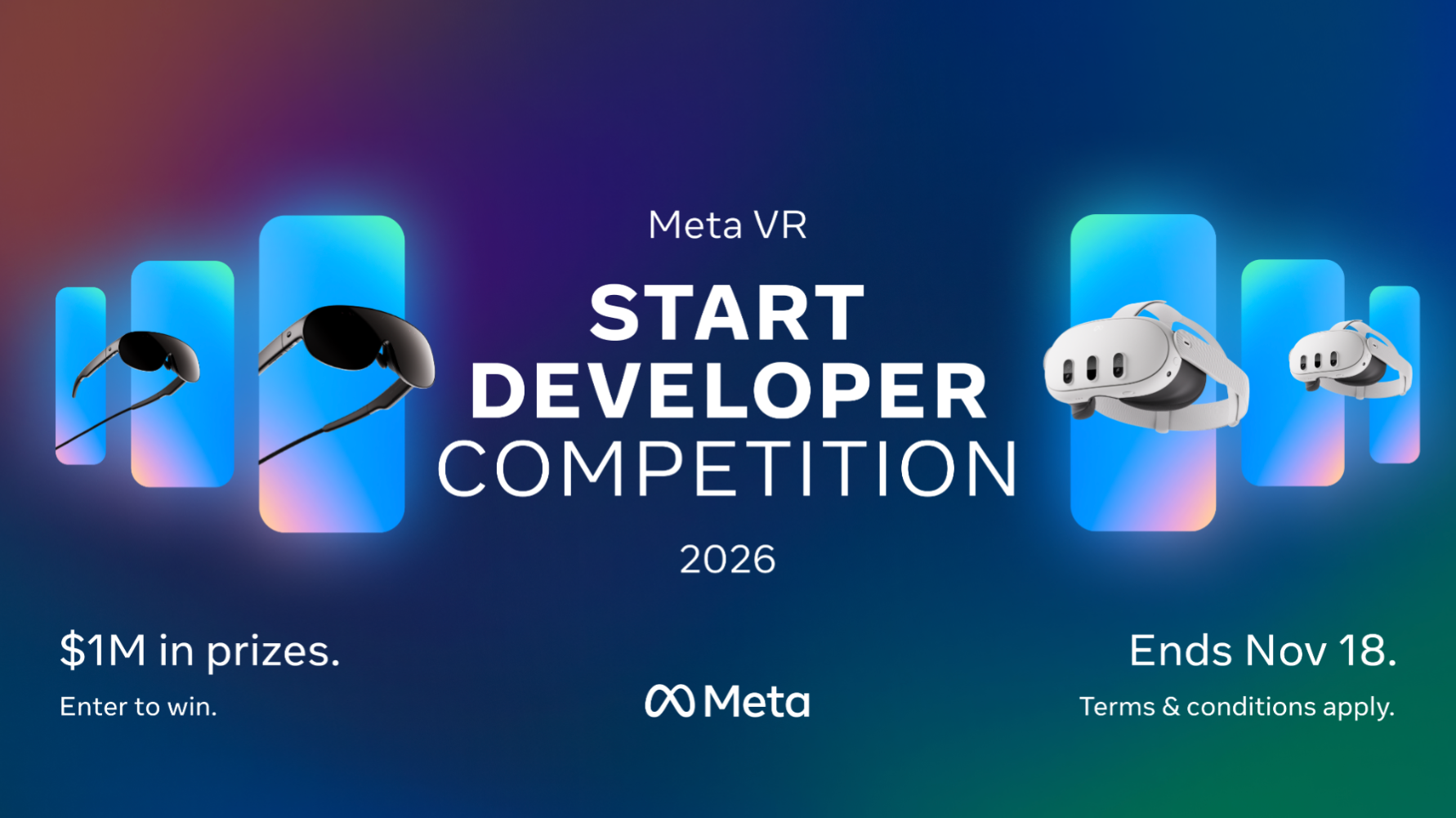
Meta has announced the Meta VR Start Developer Competition 2026, where $1 million will be awarded across 20 prizes for the development of "hands-first" applications for Quest and VR Glasses. This move represents not just a financial incentive but also an invitation for developers to rethink how users interact within virtual environments. The competition encourages the creation of applications that don't just focus on passive consumption but engage users in a more immersive and intuitive manner.
What’s New in 2026
This latest initiative marks a shift from the previous Meta competition held in late 2025, which focused on entertainment and gaming apps. Announced during the Meta Connect 2026 Developer State of the Union, the new contest emphasizes natural interaction—an essential feature given current user expectations in VR technology. Rather than relying solely on traditional controller-based navigation, Meta seems to be pivoting towards a more intuitive system that could appeal to a broader audience.
With user experience at the forefront, this shift could reframe how developers approach VR applications. Meta understands that for VR to reach its full potential, it needs to be as instinctive as possible. By promoting hands-first applications, the company is focusing on what's known as "embodied interaction," where users physically engage with their virtual environment.
Competition Requirements
Key contest stipulations specify that submitted experiences must be entirely operable with hand gestures. This requirement has implications for development, as it tests creativity and technical skills without defaulting to the comfort of controller inputs. While controller support can be included, the test is whether a user can navigate the experience without a controller. This aspect encourages developers to rethink their design strategies and user interfaces, pushing for more organic interaction models.
Compliance with all relevant Meta policies, such as Program Terms and Community Standards, is mandatory. It's a standard approach in competitions like this, aiming to maintain quality and ensure a safe user experience. However, adhering to these guidelines can sometimes feel constraining for developers eager to innovate.
Awards Breakdown
Prizes will be distributed among various categories:
- Best New Gaming Experience
- $100,000 Winner
- $50,000 Runner-up
- Best New Entertainment Experience
- $100,000 Winner
- $50,000 Runner-up
- Best New Productivity Experience
- $70,000 Winner
- $35,000 Runner-up
- Best Adapted/Significantly Updated Experiences
- $100,000 Winner
- $50,000 Runner-up
- Best Social & Multiplayer Experience
- $25,000 Winner
- Other Awards:
- Best Accessibility Forward Experience: $25,000
- Judge's Choice: $20,000 for 2 winners
With monetary prizes aiming to attract a diverse range of developers, Meta is signaling that every corner of virtual interaction matters—from gaming to productivity. The wide variety of categories is an attempt to ensure that no significant aspect of user experience is overlooked, which is smart considering how competitive the VR market has become.
What's intriguing is that the awards are not all equal; for instance, the productivity experience has a smaller monetary award compared to gaming and entertainment. This could suggest where Meta believes its future investment should lie but might also signal a lesser focus on productivity applications compared to more entertaining engagements.
Submission Details
Entries can include entirely new apps or those that are adapted or significantly updated to fit the competition's criteria. Updates may encompass new features such as hand interactions, multiplayer capabilities, or mixed reality modes. This flexibility is essential for developers who already have existing applications that could benefit from enhanced interaction techniques.
The deadline for submissions is November 18, 2026. Developers interested in participating can register on Devpost, but first-time entrants will need to apply for Meta VR Start membership. This membership requirement highlights Meta's intent to create a dedicated community around its VR platforms, ensuring that participants are engaged and aligned with its objectives.
Looking Ahead
This competition coincides with the unveiling of the Meta VR Glasses, which will launch in spring 2027. Notably, these glasses prioritize Eye and Hand Tracking technology, with optional controller support. This change symbolizes a larger trend in VR where adaptability and natural interaction are becoming increasingly essential. Developers will need to focus on creating applications that make the most of these advanced capabilities if they want to succeed.
What this means for you, particularly if you’re a developer in this space, is that the competition won’t just be about winning a cash prize. It’s about defining the future catalog of applications for a highly anticipated product. The challenge is significant, and the rewards—not just financial—could set the tone for how hand tracking and eye tracking technologies are perceived and employed in the marketplace.
And this is the part most people overlook: the competition may draw in more developers looking for an entry into the VR market, broadening the pool of ideas and applications available. As the technology matures, so too will the expectations of users. It's clear: it’s only going to get more challenging for developers. The landscape is shifting, and those who adapt quickly could very well find themselves leading the pack.
Discussion
Sign in to join the discussion.