Unseen Reality's URXR One headset has raised nearly $1.3 million on Kickstarter, offering an ultralight passthrough display with impressive specs.
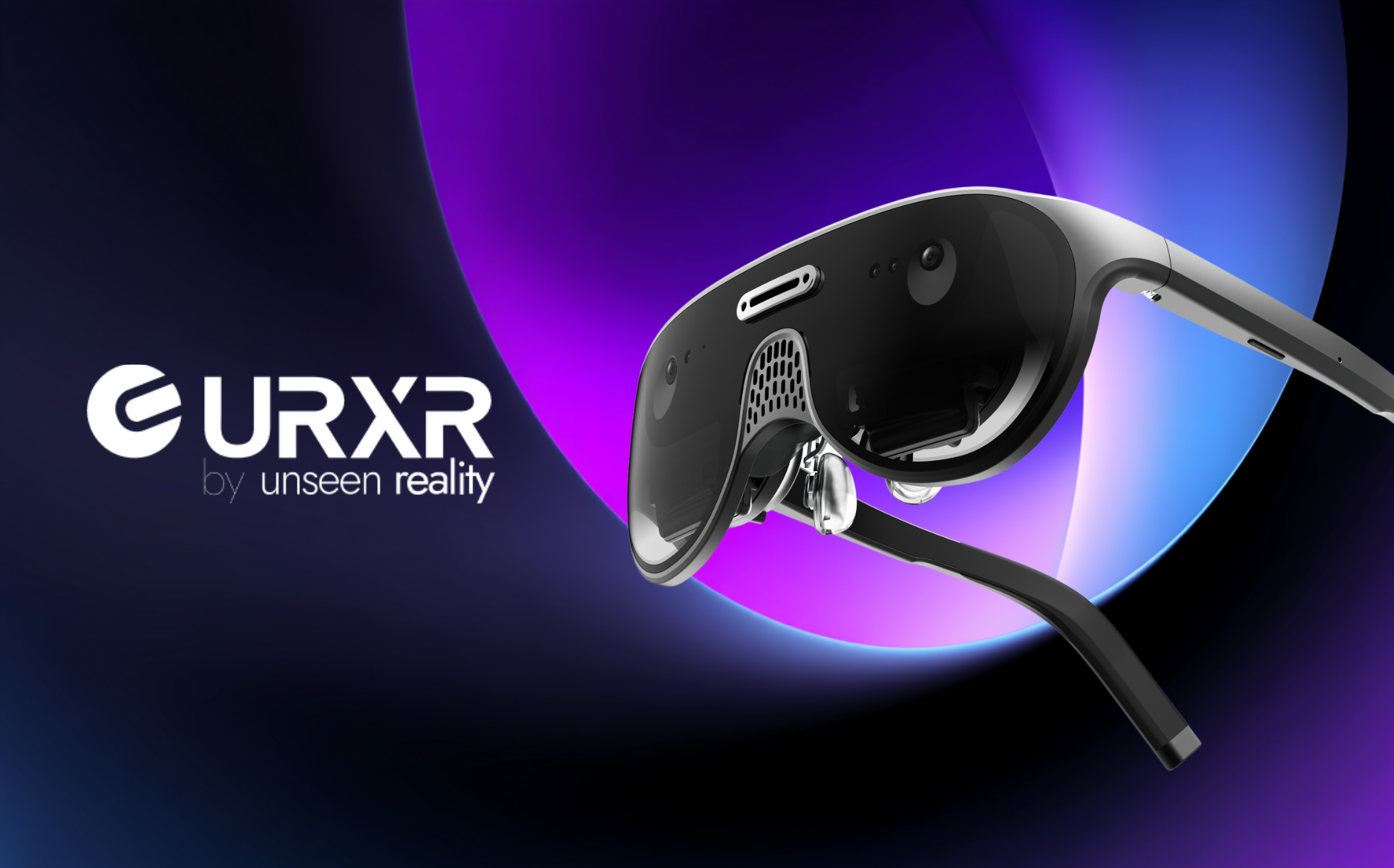
Unseen Reality has successfully concluded its Kickstarter campaign for the URXR One, raising an impressive $1,288,712. This ultralight headset tips the scales at just 93 grams and functions as a virtual monitor, enhancing digital interaction with the physical world. While the numbers from the Kickstarter campaign reflect considerable interest, it's essential to explore whether this enthusiasm is indicative of lasting market demand. Crowdfunding can sometimes produce hullabaloo that doesn’t translate into sustained sales after the initial excitement ebbs.
Revolutionizing Mixed Reality Experience
The URXR One utilizes pancake lenses to deliver a VR-style experience, allowing users to see their surroundings via integrated passthrough cameras. This design choice facilitates a uniquely immersive experience that enhances multitasking capabilities by virtually overlaying digital content onto real-world settings. Users can navigate their physical environment while simultaneously interacting with digital information, a dual capability that plays well in professional and creative spaces. The proprietary GravityXR G-X100 coprocessor chipset plays a pivotal role, handling functions like positional tracking and optical hand tracking without the burden of extensive onboard computing or a battery. The emphasis on minimal power consumption and low heat generation means extended use without the risk of overheating, a nagging issue for many current AR devices. Instead, it relies on external devices for rendering tasks, which may limit some users who prefer an all-in-one solution.
Specifications and Performance
Equipped with dual 2448×2064 micro-OLED displays, the URXR One boasts a field of view of approximately 80° horizontally and 56° vertically, translating to nearly 90° diagonally. This configuration operates at a refresh rate of up to 90Hz, delivering a smooth visual experience that can elevate virtual typing or gaming. Users can connect the device to a laptop, smartphone, or other compatible gadgets through USB-C DisplayPort output, enabling a 6DoF virtual monitor display. It supports a 2560×1440 signal at 90Hz, making it appealing for gamers and professionals alike. However, it’s worth considering whether users will need more than 90Hz for applications demanding super-smooth visuals, especially in fast-paced gaming or motion-sensitive tasks.
Market Positioning and Comparison
The URXR One’s positioning aligns it with offerings from competitors such as Xreal and Viture, who also market similar virtual monitor glasses. However, it distinguishes itself with a wider field of view, as even Xreal’s upcoming Aura device only achieves a diagonal view of 70°. Brand alignment could make perceptions vary among consumer segments, especially tech enthusiasts wanting value for their money. Moreover, URXR’s software enables users to establish multiple virtual monitors on both Windows and Mac devices, integrating hand tracking controls to enhance user interaction in a spatial context. These features might not only attract gamers but also professionals in creative fields, where multitasking on multiple digital platforms is often the norm. But are those features enough to shift existing users from competitors? That's another question entirely.
Future Prospects and Challenges
Starting at a retail price of $999, the URXR One is slated to begin shipping to early backers in October and to new customers by November. For users looking to connect a smartphone, an additional $69 Power Hub will be available, expected to ship in December. While the initial pricing seems appealing for the technology offered, potential buyers might weigh this against whether the features offered represent a strong value for the price. Future plans include adding support for PC VR, enabling its use as a SteamVR headset, though this functionality will not be ready at launch. And here's the kicker: Such future support could either bring in a new wave of users or alienate early adopters waiting for promised features.
Unseen Reality's product arrives amidst the buzz around Meta's anticipated headset, codenamed Phoenix, which is rumored to feature a similar lightweight form factor. Make no mistake — competition is fierce. As brands jockey for consumer attention, the URXR One's market impact will hinge on its performance against forthcoming products, including those from industry giants like Meta. A single misstep in quality or feature delivery could see it rapidly lost in the shuffle. (And this is the part most people overlook)
Implications and Significance
The launch of the URXR One is about more than just another tech product; it could signal a shift in how we interact with digital and physical environments. If you're working in this space, understanding what the reception of this headset means for broader trends in augmented reality is key. Its success could push competitors to innovate further, benefiting consumers in technology offerings. On the flip side, if the product falls flat, it may indicate that user demands are still not being met effectively in this crowded market. At the end of the day, Unseen Reality's URXR One has a mountain to climb to establish itself as more than just a fleeting trend, and its journey will be closely watched by both consumers and industry analysts alike.
Discussion
Sign in to join the discussion.