AMD Radeon RX 9060 XT: A Cost-Effective GPU for Gamers
Published Jun 04, 2025Reads 597By Areej
The AMD Radeon RX 9060 XT offers solid performance at an attractive price, making it a budget-friendly choice for gamers looking to compete with NVIDIA.
Radeon RX 9060 XT: Budget-Friendly Performance
AMD's latest GPU, the Radeon RX 9060 XT, enters the market as a budget option within the RDNA 4 framework, available in configurations with 8 GB and 16 GB of memory. Built on the
Navi 44 architecture and produced using TSMC’s cutting-edge 4nm (N4P) process, this card is engineered to take on NVIDIA's offerings head-to-head. It's a crucial player at a time when gamers are increasingly conscious of the balance between performance and cost. The RX 9060 XT targets consumers eager for performance that matches or exceeds that of the RTS 5060 and 5060 Ti.
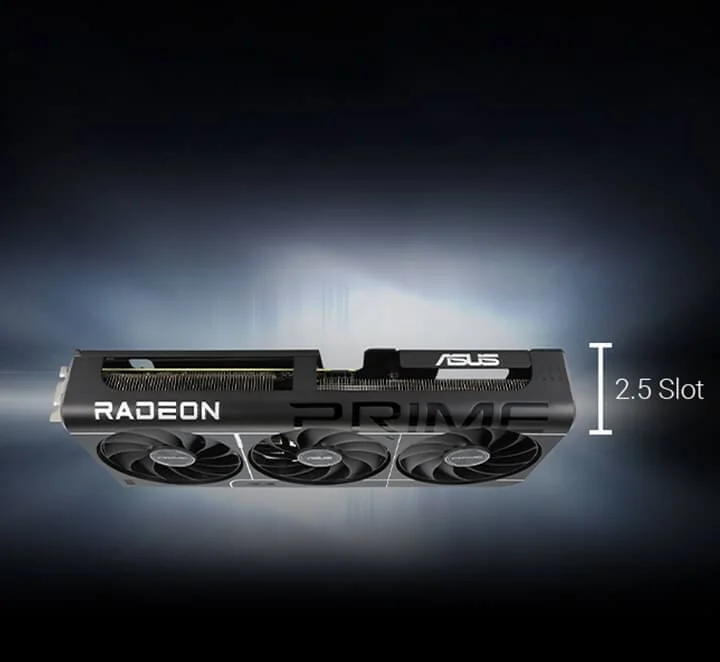
In a comparative evaluation, we pit the ASUS Prime RX 9060 XT 16 GB OC model against MSI's GeForce RTX 5060 Ti 16 GB Ventus. This showdown sets the stage for evaluating two cards at a similar price point: $299 for the RX 9060 XT and $379 to $429 for the RTX 5060 Ti. Price sensitivity is prominent in today's GPU market, so how these cards perform at 1080p and 1440p resolutions becomes pivotal for budget-conscious buyers.
Hardware Specifications: A Closer Look
When examining the technical specifications, the RX 9060 XT demonstrates significant potential with 2,048 stream processors spread across 32 compute units. This yields a peak performance of 25.6 TFLOPs. In contrast, the RTX 5060 Ti boasts 4,608 cores situated in 36 streaming multiprocessors, which results in a peak performance of 23.70 TFLOPs.
Here’s how they stack up in a table:
| Specs | NVIDIA RTX 5060 | AMD RX 9060 XT | NVIDIA RTX 5060 Ti |
|------------------------------|------------------|------------------|---------------------|
| Architecture | Blackwell | RDNA 4 | Blackwell |
| CUs/SMs | 30 | 32 | 36 |
| Shaders/Cores | 3,840 | 2,048 | 4,608 |
| Base Clock | 2,280 MHz | 2,220 MHz | 2,407 MHz |
| Boost Clock | Up to 2,497 MHz | Up to 3,130 MHz | Up to 2,572 MHz |
| Memory Size | 8 GB | 8GB|16 GB | 8GB|16 GB |
| Memory Type | GDDR7 | GDDR6 | GDDR7 |
| Memory Clock | 28 Gbps | 20 Gbps | 28 Gbps |
| Memory Bandwidth | 448 GB/s | 320 GB/s | 448 GB/s |
| Total Board Power (TBP) | 145W | 150W|160W | 180W |
| Launch Price | $299 | $299|$349 | $379|$429 |
The RX 9060 XT’s memory bandwidth draws attention, particularly as it comes in at 320 GB/s, significantly lower than the RTX 5060 Ti’s 448 GB/s. This discrepancy could be a limiting factor in performance when dealing with higher resolutions or memory-hungry applications. While AMD’s offering is priced competitively at launch, its somewhat constrained memory band could present challenges in future-proofing against upcoming titles that demand more from the hardware.
Performance Insights
From a performance angle, the RX 9060 XT showcases a mix of strengths and weaknesses. For demanding titles like "A Plague Tale: Requiem," the RX 9060 XT falls short, performing only about 3-4% slower than the RTX 5060 Ti at 1080p. Given the pricing gap, this performance is fairly commendable. Still, in more resource-intensive games like "Elden Ring," the RX 9060 XT shows a stark 25% deficit at maximum settings. This kind of variance is telling. It suggests that while the RX 9060 XT may seem like the budget champion on paper, its practical performance can vary significantly depending on the technical demands of specific games.
Most users aiming for decent performance at 1080p will likely find the RX 9060 XT satisfactory, often averaging well above 60 FPS. However, for those pushing the envelope at 1440p, the card may struggle to keep pace with its competitors, leaving gamers wanting more.
Interestingly, the RX 9060 XT's VRAM usage has been observed to exceed that of the RTX 5060 Ti in several titles. The reasons behind this are multifaceted and still warrant exploration; it could relate to the architectural differences in how each GPU manages textures and assets during gameplay. And this is the part most people overlook. Oftentimes, graphics performance isn’t solely about raw numbers but also how the GPU interprets and renders in real-time.
In essence, the RX 9060 XT stands as a robust option for gamers focused on price-performance without sacrificing quality. If you're looking to maximize your gaming experience without breaking the bank, AMD's RX 9060 XT certainly holds up its end of the bargain.
Future Implications and Significance
So, what's the significance of the RX 9060 XT entering the market now? The timing of its release speaks volumes about the current state of GPU competition. As AMD pushes further into the budget spectrum, we may witness an acceleration in NVIDIA's pricing strategies and product offerings. If you’re working in this space, it’s vital to keep an eye on how AMD's entry-level cards will force even established players to reconsider their strategies.
Furthermore, the RX 9060 XT's potential to be a go-to for casual gamers and those just getting into PC gaming can make a meaningful impact on market trends. It’s not just another GPU; it represents AMD's commitment to making PC gaming more accessible. You might find that this shift alters consumer expectations around what constitutes value in dedicated graphics performance.
In summary, while the RX 9060 XT may not dethrone the high-end GPUs, its entry provides consumers with more options—especially valuable in a marketplace where affordability and performance continue to clash.
Discussion
Sign in to join the discussion.