Composer Nicolas Garcia shares his innovative process and inspirations behind the haunting score of Cthulhu: The Cosmic Abyss, awarded Best Original Score.
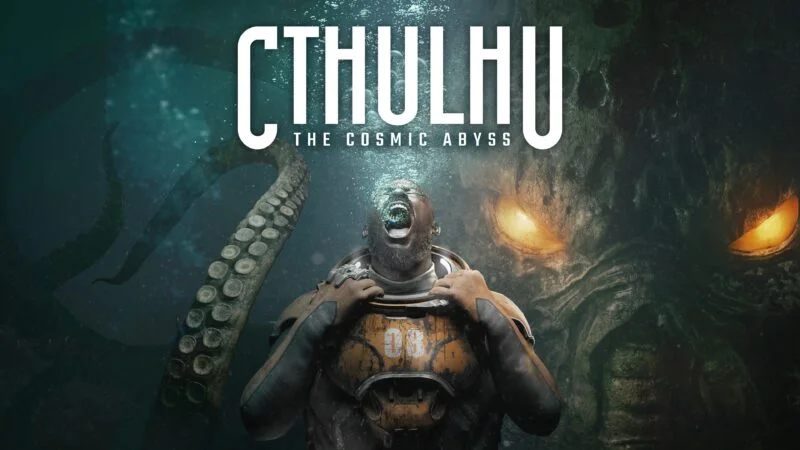
Nicolas Garcia, the mind behind the evocative score of Cthulhu: The Cosmic Abyss, recently spoke about his creative journey and the strategies that culminated in the game winning the Crystal Pine Award for Best Original Score. While attending the awards in Croatia, he highlighted the careful balance he maintained between discomfort and player engagement in crafting the game's unique audio experience.
The Art of Building Atmosphere
The game’s soundscape plays a pivotal role in its horror narrative, creating an oppressive feeling that envelops players. Garcia detailed how his collaboration with Audio Director Dorian Pfister shaped the musical philosophy. They aimed for a sound experience that avoided extremes: too much dissonance would lead players to turn down the volume, while not enough could render the music ineffective.
“I worked on several fronts at once: ambiguous harmonies, long dissonances, and synthetic sounds,” Garcia reflected. “We also established sonic codes tied to specific themes and chapters, crafting a gradual descent into the abyss.”
Unconventional Recording Techniques
A standout moment during the game’s production involved Garcia’s inventive use of a submerged field recorder placed inside a sealed water barrel for capturing underwater sequences. He recounted the experimental spirit that drove this decision.
“I remembered a barrel in my garden,” he explained. “Through various sessions, I struck, rubbed, and scraped the barrel, producing sounds that no commercial library could replicate. This raw quality genuinely enhances the atmosphere, making it a unique sonic palette,” he noted.
Balancing Restraint and Escalation
Garcia’s approach also hinges on restraint, carefully crafting a score that embodies the essence of cosmic horror without veering into melodrama. The music subtly escalates, mirroring the player's descent into psychological unease.
“I worked in almost imperceptible layers... The harmonies often remain unresolved, as if the player were sinking into something irreversible,” he stated, expressing the need to suggest rather than assert fear.
Incorporating Ancient Instruments
An unexpected yet brilliant choice was integrating the carnyx, an ancient brass instrument. Garcia discussed his quest to blend historical authenticity with modern soundscapes.
“I wanted to create a call throughout the score, and the carnyx's limitations provide a singular character,” he described. The instrument features in various moments, often creating a subliminal presence that deepens the horror ambiance without overpowering the scene.
Collaborative Creation of Sound
The synergy between music and environmental sound design proved integral to the game's overall effectiveness. Garcia described a smooth collaboration with Pfister, allowing music and sound design to evolve in harmony rather than conflict.
“We conceived the two elements as a single psychological tool... this collaboration prevented any conflict and truly crafted an immersive experience,” he asserted.
Long-Term Tension in Horror
Garcia cited influences such as the score of Alien and composers like Krzysztof Penderecki and György Ligeti for their expertise in sustaining tension over extended periods. These inspirations guided his method of maintaining dread throughout gameplay.
“Music must precede emotion... it creates an expressiveness all its own within psychological horror,” he explained, emphasizing how unique textures can evoke feelings without clear melodies.
Explorations in Instrumentation
The soundtrack also showcases a variety of unconventional instruments, enriching the experience with unique textures. Among them were the citole and guqin, both contributing to the depth of the game’s sound.
“The bowed citole tracks disappear and reappear with gameplay dynamics... it’s all about crafting original sounds that fit the narrative,” Garcia mentioned.
In wrapping up our conversation, Garcia reflected on the fundamental differences that horror games demand in composition compared to other genres. His exploration into silence and texture has equipped him to navigate this intricate space effectively.
Previously, our review remarked that Cthulhu: The Cosmic Abyss excels in audiovisual presentation, enhancing its impact through a dense, oppressive atmosphere. The game is currently available on PC via Steam, PlayStation 5, and Xbox Series.
The insights offered by Garcia deepen the understanding of how intentional sound design can uplift a game’s narrative, and the ways in which he crafted a truly haunting experience for players.
Discussion
Sign in to join the discussion.