Temitayo Ogunbiyi reimagines steel piping into playful structures, blending art and functionality while redefining public play spaces globally.
Rethinking Playground Design
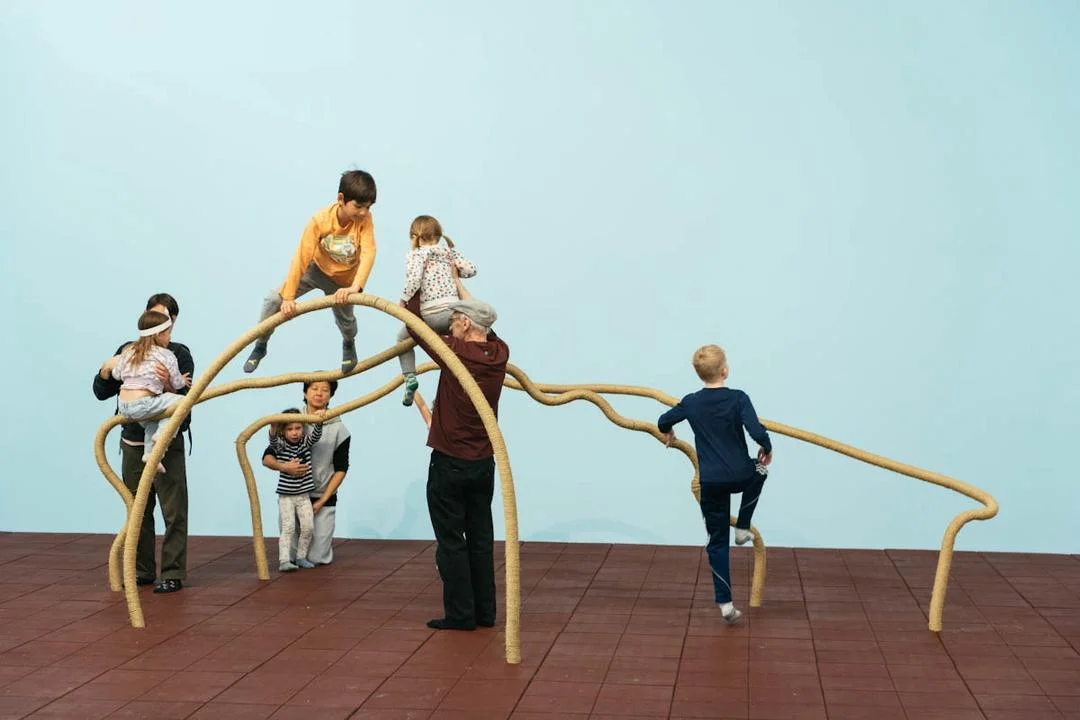
Temitayo Ogunbiyi's approach to playground design diverges notably from traditional practices. Instead of viewing security fencing through a limiting lens, she identified galvanized steel piping as a versatile building block. This material, often associated with exclusivity in Lagos, is now being repurposed into affordable, weather-resistant structures for public enjoyment. This shift in perspective on materials not only reflects Ogunbiyi’s creative ingenuity but also addresses a pressing need for accessible recreational spaces. As urban spaces become increasingly crowded, innovative ideas like hers are essential. They not only elevate play design but also redefine how communities can engage with public spaces.
A Unique Play Testing Philosophy
Ogunbiyi's process challenges the norm by deliberately excluding children from pre-installation play tests. Instead, she conducts engineering evaluations, believing that the inherent unpredictability of adult interactions with her creations often reveals deeper insights. Here’s the thing: not involving children in initial tests can seem counterintuitive, given that they are the primary users. However, Ogunbiyi has a point. By focusing on adult reactions—those who engage with the structures in unexpected ways—she gathers unique data on usability and safety. Observing adults rediscover their own physicality around her playgrounds, she describes the experience as “hilarious,” emphasizing a playful reclamation of movement. This dynamic reshapes the perception of play; adults, often seen as confined to roles of authority or supervision, regaining their playful instincts, can provide valuable feedback that designers might overlook. And yet, one has to wonder: what are the implications of not allowing children, the intended users, to provide input at all? While it can yield unexpected insights, it also risks missing the mark on what kids truly want and need.
Exhibitions and Global Reach
Her work has garnered attention across multiple venues, tracing a fascinating journey from a series of drawings presented to curator Dakin Hart in 2018 to her first completed playground in Lagos. This trajectory illustrates how her vision has evolved from concept to execution. Ogunbiyi’s artistic dialogue extends to exhibitions like the one at the Bundeskunsthalle in Bonn and her Venice Biennale installation, where initial reactions highlighted the playful nature of her designs. Engaging with audiences across different cultures, she’s sparked conversations about the role of play in community building and urban design. Her projects aren't just about play; they're a commentary on public space usage, accessibility, and societal interaction.
Looking ahead, her forthcoming solo exhibition at the Wexner Center for the Arts in Ohio is set to open in September 2026, promising further exploration into her unique vision. Such platforms provide Ogunbiyi the opportunity to push her ideas further, yet they also pose a challenge: how do you keep the essence of play alive in a gallery setting traditionally dominated by static exhibitions? She'll need to navigate that effectively. The intersection of art and play is often problematic; after all, can a gallery setting truly capture the energy and spontaneity of a playground?
Implications for Future Playground Design
The significance of Ogunbiyi's work crosses borders and reaches beyond physical design. If you're working in this space, you understand that play is more than mere recreation; it's essential for cognitive and social development. Ogunbiyi's designs invite a rethinking of how children interact with their environments and challenge the often rigid conventions of traditional playgrounds. There’s room for flexibility and adaptation. The playful reclamation of movement she encourages among adults highlights an important cultural shift—play isn’t just for children anymore.
As urban planners and designers look to incorporate more inclusive and multifunctional spaces, Ogunbiyi's philosophy might serve as a model. Public parks and playgrounds should not just be checked-off items on a city planner's list; they should invite engagement from all demographics. This is more significant than it looks: involving adults and reevaluating standard materials can transform community engagement. The playful spirit she celebrates encapsulates a broader movement towards encouraging healthier, happier urban living. Rather than just constructing spaces for children, her vision expands to include adults, fostering community interaction in the process.
As we think about the future of public spaces, the questions emerge: What will future playgrounds look like? Will they continue to evolve beyond strict classifications of play? In addressing these matters, Ogunbiyi’s work is not merely art; it’s a catalyst for change in how societies view play and interaction with shared environments. As cities grapple with modernization and increasing demands for open spaces, her contributions may serve as blueprints for fostering a holistic vision of community engagement through design.
Discussion
Sign in to join the discussion.