Danny Snelson delves into media formats and artistic interpretations, exploring how context reshapes perception in games and films.
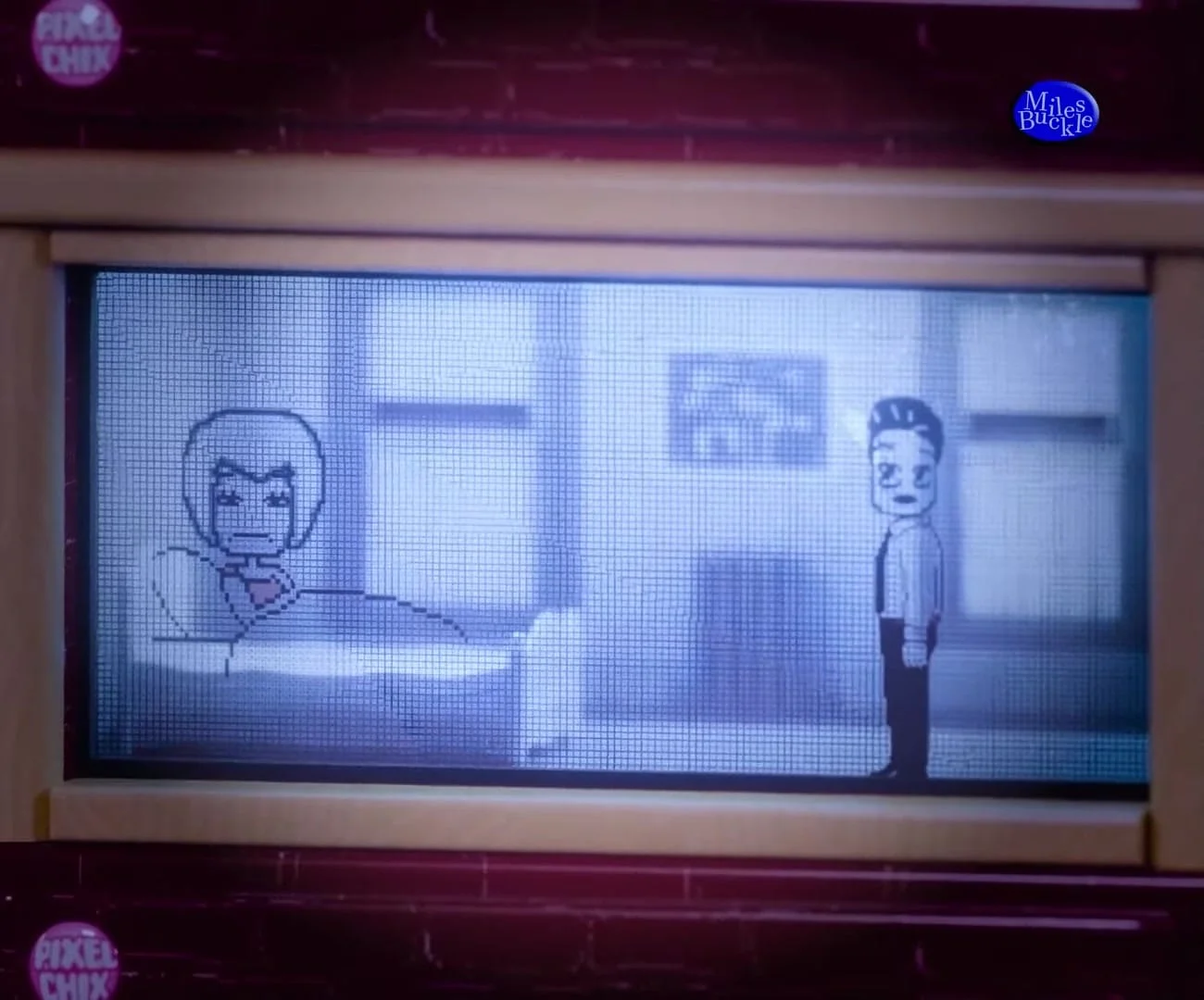
In a recent conversation, Danny Snelson, a writer and professor at UCLA, tackles the complex relationship between artistic works and their mediums. The discussion kicks off with a unique case of a police station designed with intentional flaws, prompting the question: how does an artwork transform when it’s placed in an unconventional container? It’s a thought-provoking inquiry, challenging our perceptions of space and design in artistic expression.
Artworks and Their Mediums
Snelson draws on Ed Smith’s analysis of Resident Evil 2, where the horror game's architecture is termed “anatomically correct but tonally wrong.” This concept connects to Freud’s theories and explores the disorienting geometry of settings like the Overlook Hotel from The Shining. Analyzing these spaces reveals that architecture does more than provide a backdrop; it shapes emotional responses and narrative interpretations. The ability of a space to evoke fear or intrigue hinges on both its physical design and the psychological expectations it instills in the audience.
The conversation then navigates to Zach Cregger’s film adaptation of Resident Evil, where the iconic typewriter embedded in the narrative carries decades of gaming history. This inclusion is telling—typewriters are relics that evoke nostalgia for older gaming fans and signify a shift in mediums, reminding viewers of the importance of analog interfaces in a digital age. The integration of such elements highlights how older devices can be re-contextualized in modern storytelling, providing a bridge between gaming and cinematic experiences.
Reimagining the Classics
The dialogue shifts to Miles Buckle, an artist known for reimagining cherished cinematic classics such as Rear Window and Amarcord as early gaming experiences. Buckle's approach reflects a broader trend in which contemporary artists rework past narratives to create something both familiar and new. This technique can often evoke a sense of nostalgia while also prompting critical engagement with how stories evolve across different formats.
Snelson explores the lineage from Lego to modern platforms like Roblox, discussing the unsettling aesthetics of low-polygon characters adorned with JPEG textures. This mechanical simplicity compares starkly to the wealthy, intricate designs of late ’90s gaming conventions. It raises questions about how technological advancements influence aesthetic choices and how these choices reflect cultural narratives in gaming. Are we regressing in aesthetics for the sake of retro charm, or is this a newfound expression of creativity? Here’s the thing: often, it’s both.
The Little Database and Its Implications
Another highlight is Snelson’s own publication, The Little Database, freely accessible from the University of Minnesota Press. This effort has evolved into a directory housing 44 small archives, showcasing works that interrogate media formats. A prime example is Paul Sharits’s flicker film Dots, where the experience varies drastically between celluloid projection and YouTube’s compressed version, demonstrating how digital formats can alter perception rather than diminish it. It’s a critical examination of how the medium itself can reshape the audience's experience, shifting from passive viewing to active interpretation.
In considering Snelson's contributions, it’s apparent that the interplay between medium and message is a fertile ground for inquiry. As digital platforms dominate, understanding how they reshape artistic output becomes vital. With differing levels of access and varying presentation qualities, each format cultivates unique viewer interactions that can either enhance or hinder understanding.
Modern Art Forms and the Future
In closing, Snelson provides concise reflections on evolving art forms, including Mitch Anzuoni’s money laundering simulation and Joshua Mattson’s satire in Defence Contractor Fantasy World, featuring a surreal latex hand. Modern themes often dissect contemporary truths and absurdities, providing biting commentary that resonates with current societal issues. It’s an era where satire finds its place across both digital and physical mediums, highlighting the necessity for art in critiquing societal norms.
He notes a new alternative control cabinet at Wonderville in Brooklyn—this isn't just a practical tool, it’s a testament to the intersection of art and interactive media today. The cabinet symbolizes how interactive experiences can merge traditional artistic expressions with interactive play, creating a hybrid space where audiences can engage in new ways.
Implications and Future Outlook
This exploration of medium and artistic expression is more significant than it looks. As technology continues to evolve, the way we engage with art will transform, calling into question established narratives and methodologies. What this means for you, as a consumer or creator, is that understanding these shifts isn’t just about keeping pace; it's about redefining how we perceive artistic worth and cultural significance.
The landscapes of art and media are interconnected in fascinating ways. The implications stretch beyond mere aesthetic preferences—what’s unfolding is a dialogue that redefines art’s role within society. This dialectic invites participation, critique, and ultimately innovation. (And this is the part most people overlook.) The future isn't about resisting change; it's about embracing it to discover uncharted territories in expression.
Links
- My feature on Miles Buckle, who makes games you can't play
- Ed Smith, “The horror of Resident Evil 2’s police station”
- The Little Database expands into a desktop directory
- Kill Screen on the Resident Evil film’s save points
- Kill Screen on Defence Contractor Fantasy World
- Danny Snelson, The Little Database: A Poetics of Media Formats
- The Little Database desktop directory
- Scott Richmond, Cinema’s Bodily Illusions
- Pippin Barr, v r 3
- Miles Buckle on Instagram
- Paul Sharits, Dots 1 and 2 on UbuWeb
- Fiasco, from Bully Pulpit Games
Corrections
- We refer to “The Curse of the Golden Idol.” The game is The Case of the Golden Idol.
- Joshua Mattson is based in Linz, Austria, not Germany.
- The Grand Theft Auto VI story concerned a single Army unit offering a four-day pass as a reenlistment incentive, not the US military broadly.
Hosted by Jamin Warren with Danny Snelson. Music by Nick Sylvester.
Discussion
Sign in to join the discussion.