Mountain Pose A Simple Yet Powerful Yoga Pose for Beginners
Mountain Pose A Simple Yet Powerful Yoga Pose for Beginners
Mountain Pose Yoga Pose
Mountain Pose Yoga Pose
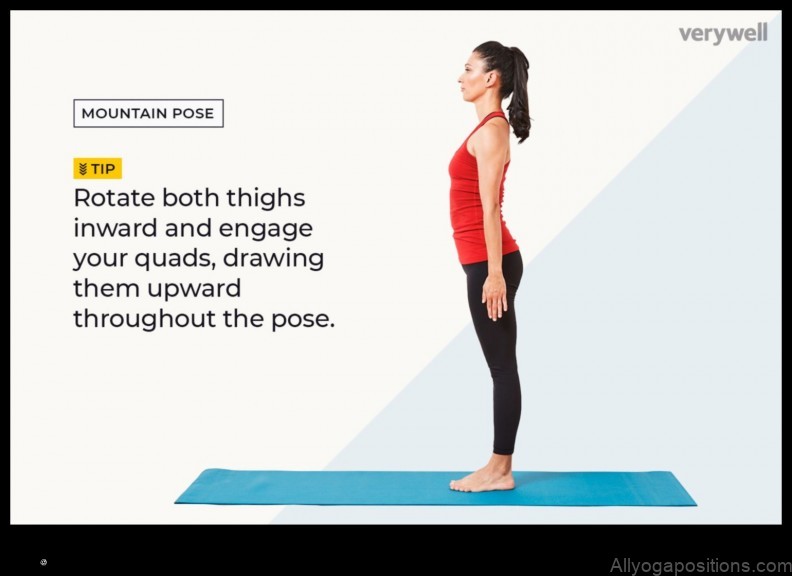
Mountain Pose (Tadasana) is a basic standing yoga pose that is often used as a starting point for other poses. It is a great way to connect with your breath and body, and to improve your balance and posture.
Here are some of the benefits of Mountain Pose:
Improves balance and coordination
Strengthens the core and legs
Increases flexibility in the spine
Reduces stress and anxiety
Improves circulation
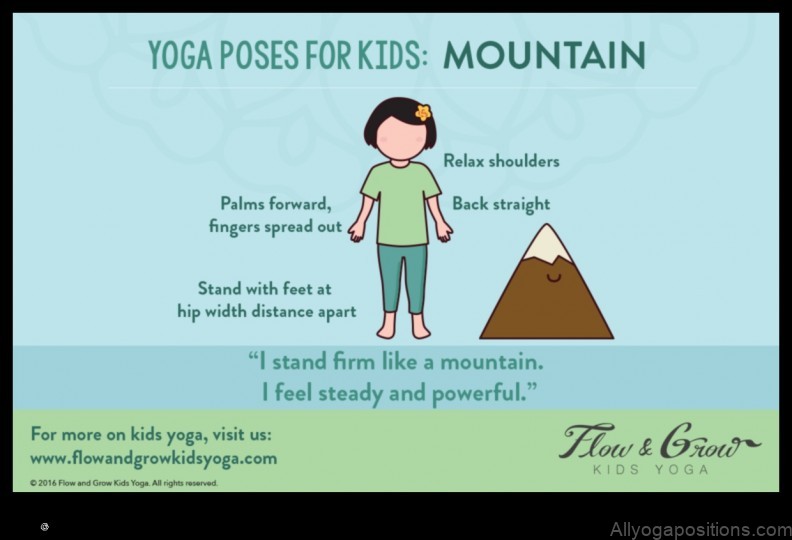
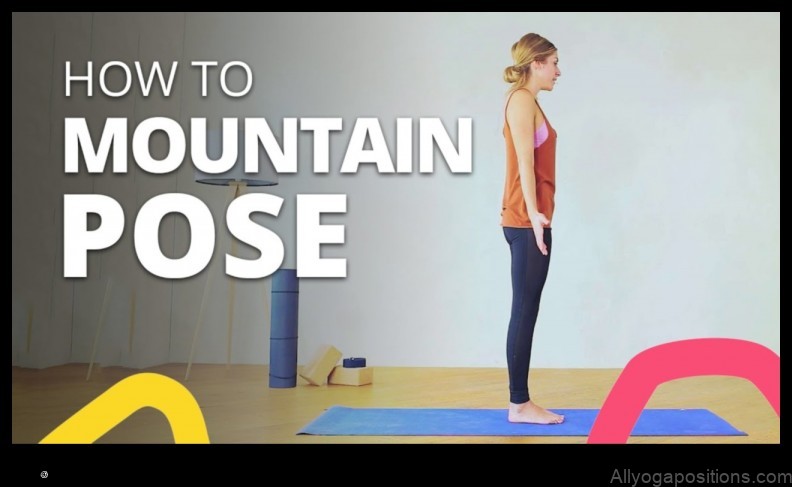
To do Mountain Pose, start by standing with your feet hip-width apart and your toes pointing forward. Ground your feet firmly into the ground and lengthen your spine. Inhale and raise your arms overhead, then exhale and bring your arms back down to your sides. Keep your shoulders relaxed and your gaze forward. Hold the pose for 5-10 breaths.
Here are some common mistakes to avoid in Mountain Pose:
Slouching your shoulders
Locking your knees
Tightening your neck
Breathing shallowly
If you have any pain or discomfort in Mountain Pose, modify the pose by placing a block under your heels or by bending your knees slightly.
Mountain Pose is a safe and beneficial pose for most people. However, it is contraindicated for people with high blood pressure, glaucoma, or any other condition that is aggravated by standing upright.
Here are some safety tips for Mountain Pose:
Listen to your body and modify the pose if you experience any pain or discomfort.
Breathe deeply and slowly throughout the pose.
Don’t hold the pose for too long.
Here are some FAQs about Mountain Pose:
Q: What are the benefits of Mountain Pose?
A: Mountain Pose has many benefits, including improving balance and coordination, strengthening the core and legs, increasing flexibility in the spine, reducing stress and anxiety, and improving circulation.
Q: What are the common mistakes to avoid in Mountain Pose?
A: The common mistakes to avoid in Mountain Pose include slouching your shoulders, locking your knees, tightening your neck, and breathing shallowly.
Q: Is Mountain Pose safe for everyone?
A: Mountain Pose is safe for most people, but it is contraindicated for people with high blood pressure, glaucoma, or any other condition that is aggravated by standing upright.
Conclusion
Mountain Pose is a basic standing yoga pose that is a great way to connect with your breath and body, and to improve your balance and posture. It is a safe and beneficial pose for most people, and it can be modified to accommodate different levels of ability.
A standing yoga pose that strengthens the core, legs, and back.
A general term for any yoga pose that is done while standing.
The most basic standing yoga pose.
A yoga pose that involves bending forward from the standing position.
Improves posture, strengthens the core, and reduces stress.
Benefits
Strengthens the core, legs, and back
Improves posture
Reduces stress
Increases flexibility
Improves balance
Varies depending on the specific pose
Varies depending on the specific pose
Varies depending on the specific pose
Varies depending on the specific pose
Varies depending on the specific pose
How to do
Stand with your feet shoulder-width apart.
Engage your core and glutes.
Draw your shoulders back and down.
Extend your arms out to the sides, parallel to the floor.
Hold the pose for 5-10 breaths.
Varies depending on the specific pose
Varies depending on the specific pose
Varies depending on the specific pose
Varies depending on the specific pose
Varies depending on the specific pose
Common Mistakes
Slouching your shoulders
Rounding your back
Locking your knees
Bending forward too much
Holding the pose for too long
Varies depending on the specific pose
Varies depending on the specific pose
Varies depending on the specific pose
Varies depending on the specific pose
Varies depending on the specific pose
Modifications
For beginners, start with your feet closer together.
If you have knee pain, bend your knees slightly.
If you have neck pain, keep your head in line with your spine.
If you have balance problems, hold onto a wall or chair for support.
Varies depending on the specific pose
Varies depending on the specific pose
Varies depending on the specific pose
Varies depending on the specific pose
Varies depending on the specific pose
Contraindications
If you have any type of back pain, talk to your doctor before doing Mountain Pose.
If you have any type of knee pain, talk to your doctor before doing Mountain Pose.
If you have any type of neck pain, talk to your doctor before doing Mountain Pose.
<
How to do Mountain Pose
Mountain Pose (Tadasana) is a standing yoga pose that is considered to be the foundation of all yoga poses. It is a simple pose that can be done by people of all ages and abilities. Mountain Pose is a great way to improve your balance, core strength, and posture. It is also a good way to start your yoga practice or to cool down after a yoga session.
To do Mountain Pose, stand with your feet hip-width apart and your arms at your sides. Inhale and raise your arms overhead, then exhale and bring your arms back down to your sides. Keep your spine long and your shoulders relaxed. Ground your feet firmly into the floor and press your heels down. Engage your core muscles and lift your chest up. Keep your gaze forward and breathe deeply.
Hold Mountain Pose for 5-10 breaths, then release.
How to do Mountain Pose
Mountain Pose (Tadasana) is a basic standing yoga pose that is often used as a starting point for other poses. It is a great way to connect with your breath and body, and it can also help to improve your posture and balance.
To do Mountain Pose, stand with your feet hip-width apart and your toes facing forward. Ground your feet firmly into the earth and lengthen your spine. Inhale and raise your arms overhead, then exhale and lower them back to your sides. Keep your shoulders relaxed and your chest open.
Hold the pose for 5-10 breaths, then release.
IV. Common Mistakes in Mountain Pose
Here are some common mistakes to avoid when doing Mountain Pose:
Slouching your shoulders.
Rounding your back.
Locking your knees.
Overextending your neck.
Pressing your heels down too hard.
To avoid these mistakes, make sure to:
Keep your shoulders back and down.
Arch your back slightly.
Keep your knees slightly bent.
Look forward with a neutral spine.
Allow your heels to rest gently on the ground.
V. Modifications for Mountain Pose
There are many modifications for Mountain Pose that can be made to accommodate different levels of flexibility and ability. Here are a few examples:
For those who are new to yoga or who have tight hamstrings, you can place a block under your heels to relieve some of the pressure on your legs.
If you have difficulty balancing in Mountain Pose, you can hold onto a wall or chair for support.
For those who want to challenge themselves, you can extend your arms overhead or reach back behind you.
No matter what your level of experience or flexibility, there is a modification for Mountain Pose that is right for you. Experiment with different variations until you find one that you feel comfortable and safe in.
VI. Contraindications for Mountain Pose
Mountain Pose is generally considered to be a safe pose for most people. However, there are some contraindications to be aware of, including:
If you have any type of lower back pain, you should avoid Mountain Pose or modify it by placing a block under your heels.
If you have any type of knee pain, you should avoid Mountain Pose or modify it by bending your knees slightly.
If you have any type of neck pain, you should avoid Mountain Pose or modify it by keeping your head in a neutral position.
If you have any concerns about whether or not Mountain Pose is safe for you, please consult with your doctor or a qualified yoga instructor.
VII. Safety Tips for Mountain Pose
Here are some safety tips for Mountain Pose:
Start by standing with your feet shoulder-width apart and your toes pointing forward.
Inhale and raise your arms overhead, keeping your spine long and your shoulders relaxed.
Exhale and bend forward from your hips, keeping your back flat and your knees slightly bent.
Reach your arms forward and rest your palms on your shins or thighs.
Inhale and lift your head and chest, gazing forward.
Exhale and return to standing.
If you experience any pain or discomfort in this pose, stop and consult with your doctor or a qualified yoga instructor.
FAQ about Mountain Pose
Q: What are the benefits of Mountain Pose?
A: Mountain Pose has many benefits, including:
* Strengthening the core, legs, and arms
* Improving balance and coordination
* Relieving stress and anxiety
* Improving posture
* Boosting energy levels
* Reducing pain
* Improving flexibility
* Increasing blood circulation
* Detoxifying the body
Q: What are the common mistakes in Mountain Pose?
A: Some common mistakes in Mountain Pose include:
* Rounding the back
* Hunching the shoulders
* Locking the knees
* Slumping the chest
* Allowing the head to hang forward
* Not engaging the core
Q: What are the modifications for Mountain Pose?
A: If you have any pain or discomfort in Mountain Pose, there are a few modifications you can make to make the pose more comfortable:
* Place a block under your heels to relieve pressure on your knees.
* Bend your knees slightly to take some of the pressure off your legs.
* Place your hands on your hips or thighs to support your weight.
* Rest your head on your knees or chest to relieve pressure on your neck.
Q: What are the contraindications for Mountain Pose?
A: Mountain Pose is generally safe for most people, but there are a few contraindications to be aware of:
* If you have any knee pain, you should avoid locking your knees in Mountain Pose.
* If you have any back pain, you should avoid rounding your back in Mountain Pose.
* If you have any neck pain, you should avoid allowing your head to hang forward in Mountain Pose.
Q: What are the safety tips for Mountain Pose?
A: Here are a few safety tips for Mountain Pose:
* Start by practicing Mountain Pose for a few breaths before adding any variations.
* Listen to your body and modify the pose as needed.
* Avoid overstretching or straining yourself.
* If you experience any pain or discomfort, stop practicing the pose and consult with your doctor.
Conclusion
Mountain Pose is a simple yet powerful yoga pose that can provide a variety of benefits for both beginners and experienced practitioners. It is a great way to start your yoga practice or to cool down after a more strenuous pose. If you have any injuries or concerns, be sure to consult with your doctor before practicing Mountain Pose.
Mountain Pose
Benefits of Mountain Pose
How to do Mountain Pose
Common Mistakes in Mountain Pose
Modifications for Mountain Pose
Contraindications for Mountain Pose
Safety Tips for Mountain Pose FAQ about Mountain Pose
Q: What is Mountain Pose?
A: Mountain Pose is a standing yoga pose that is considered to be the foundation of all yoga poses. It is a simple pose that can be practiced by people of all ages and abilities.
Q: What are the benefits of Mountain Pose?
A: Mountain Pose has many benefits, including:
* Strengthening the core muscles
* Improving balance and coordination
* Reducing stress and anxiety
* Boosting energy levels
* Improving posture
Q: How to do Mountain Pose?
A: To do Mountain Pose, follow these steps:
1. Stand with your feet shoulder-width apart and your toes pointing forward.
2. Ground your feet down and engage your core muscles.
3. Lengthen your spine and draw your shoulders back and down.
4. Lift your chest and gaze forward.
5. Hold the pose for 5-10 breaths.
This website uses cookies to improve your experience. We'll assume you're ok with this, but you can opt-out if you wish. Cookie settingsACCEPT
Privacy & Cookies Policy
Privacy Overview
This website uses cookies to improve your experience while you navigate through the website. Out of these cookies, the cookies that are categorized as necessary are stored on your browser as they are essential for the working of basic functionalities of the website. We also use third-party cookies that help us analyze and understand how you use this website. These cookies will be stored in your browser only with your consent. You also have the option to opt-out of these cookies. But opting out of some of these cookies may have an effect on your browsing experience.
Necessary cookies are absolutely essential for the website to function properly. This category only includes cookies that ensures basic functionalities and security features of the website. These cookies do not store any personal information.
Any cookies that may not be particularly necessary for the website to function and is used specifically to collect user personal data via analytics, ads, other embedded contents are termed as non-necessary cookies. It is mandatory to procure user consent prior to running these cookies on your website.