
Introduction
Yoga and gratitude are two practices that can have a profound impact on our overall well-being. Yoga can help us to relax, reduce stress, and improve our flexibility and strength. Gratitude can help us to cultivate a more positive outlook on life, increase our resilience, and connect with our inner selves.
When we combine yoga and gratitude, we can create a powerful experience that can help us to live more fully and authentically. This article will explore the benefits of practicing gratitude and yoga together, and provide some tips on how to incorporate gratitude into your yoga practice.
Gratitude and Yoga: A Natural Pair
Gratitude and yoga are both rooted in the principles of mindfulness and self-awareness. When we practice yoga, we are paying attention to our bodies and our breath. We are also learning to be present in the moment and to let go of our thoughts and worries.
Gratitude is a similar practice. When we practice gratitude, we are focusing on the things that we are grateful for. We are also learning to appreciate the present moment and to let go of our negative thoughts and emotions.
Yoga and gratitude are both about creating a more positive and healthy relationship with ourselves and with the world around us. When we combine these two practices, we can create a powerful experience that can help us to live more fully and authentically.
Benefits of Gratitude and Yoga
There are many benefits to practicing gratitude and yoga together. Some of the benefits include:
- Improved mood and well-being
- Reduced stress and anxiety
- Increased mindfulness and focus
- Improved sleep
- Increased energy
- Enhanced creativity
- Deeper connection with yourself and others
If you are looking for a way to improve your overall well-being, then I encourage you to try practicing gratitude and yoga together. These two practices can help you to live a more fulfilling and meaningful life.
How to Practice Gratitude and Yoga Together
There are many ways to practice gratitude and yoga together. Here are a few simple tips to get you started:
- Start your yoga practice with a gratitude meditation. This can be as simple as sitting in a comfortable position and taking a few deep breaths. As you breathe in, say to yourself, “I am grateful for my breath.” As you breathe out, say to yourself, “I am grateful for my body.” Continue to do this for a few minutes, or for as long as you like.
- During your yoga practice, focus on the things that you are grateful for. This could be anything from your health and family to your home and community. As you move through your yoga poses, take a moment to appreciate the present moment and to be grateful for all that you have.
- End your yoga practice with a gratitude journal. Write down all of the things that you are grateful for. This could be anything from the smallest things to the biggest things. Taking the time to write down your gratitudes can help you to focus on the positive aspects of your life and to appreciate the present moment.
These are just a few simple ways to practice gratitude and yoga together. The most important thing is to find what works for you and to make it a regular part of your life.
Gratitude Yoga Poses
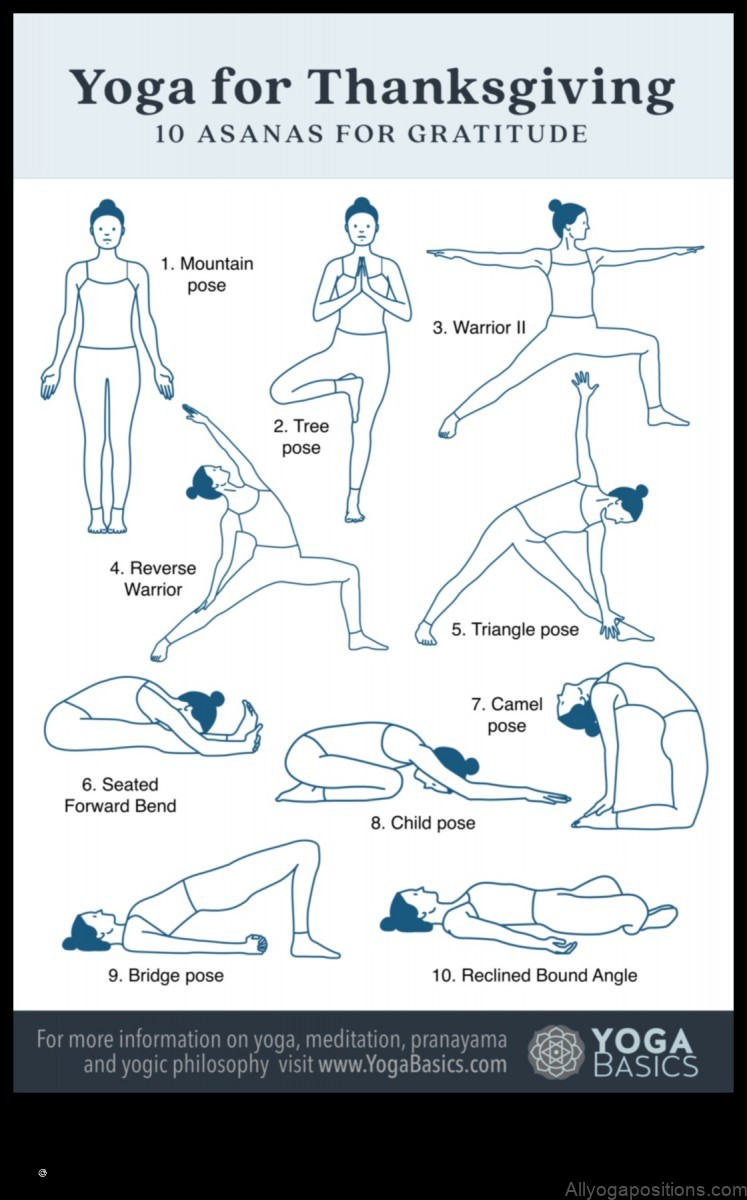
There are many yoga poses that can help you to cultivate a more grateful mindset. Some of the best poses for gratitude include:
- Child’s pose
- Downward-facing dog
- Warrior I
- Warrior II
- Tree pose
- Bridge pose
- Corpse pose
These poses are all designed to help you to relax, release tension, and connect with your inner self. When you practice these poses, focus on the things that you are grateful for. This can be anything from your
| Feature | Description |
|---|---|
| Gratitude | The feeling of thankfulness for what you have |
| Yoga | A mind-body practice that combines physical postures, breathing exercises, and meditation |
| Mindfulness | The awareness of one’s thoughts, feelings, and bodily sensations |
| Meditation | A practice that involves focusing the mind on a particular object or thought |
| Self-care | Actions that you take to take care of your physical, mental, and emotional health |
II. Gratitude and Yoga: A Natural Pair
Gratitude and yoga are a natural pair. Both practices are rooted in mindfulness and compassion, and both can help us to connect with our inner selves and experience greater well-being.
When we practice gratitude, we focus on the things that we are grateful for in our lives. This can help us to shift our perspective from the negative to the positive, and to appreciate the good things that we have.
Yoga can help us to cultivate a more grateful mindset by teaching us how to relax, focus, and connect with our bodies. When we practice yoga, we are able to let go of stress and anxiety, and to come into a deeper state of peace and awareness.
Gratitude and yoga are both powerful tools that can help us to live happier, healthier lives. When we combine these two practices, we can create a powerful synergy that can help us to reach our full potential.
III. Benefits of Gratitude and Yoga
There are many benefits to practicing gratitude and yoga together. Some of the benefits include:
Improved mood and well-being: Gratitude has been shown to improve mood and well-being, and yoga can help to increase mindfulness and relaxation. When you combine the two practices, you can create a powerful combination that can help you to feel happier and more at peace.
Reduced stress and anxiety: Gratitude and yoga can both help to reduce stress and anxiety. Gratitude can help to put things into perspective and yoga can help to relax the body and mind. When you practice both of these practices together, you can create a powerful tool for managing stress and anxiety.
Increased mindfulness and focus: Gratitude and yoga can both help to increase mindfulness and focus. Gratitude can help you to appreciate the present moment, and yoga can help you to quiet the mind and focus on your breath. When you practice both of these practices together, you can create a powerful tool for improving your focus and concentration.
Connection with your inner self: Gratitude and yoga can both help you to connect with your inner self. Gratitude can help you to appreciate your own strengths and accomplishments, and yoga can help you to connect with your body and mind. When you practice both of these practices together, you can create a powerful tool for self-discovery and growth.
Improved overall health and well-being: Gratitude and yoga can both help to improve your overall health and well-being. Gratitude can help to boost your immune system and reduce inflammation, and yoga can help to improve your flexibility, strength, and balance. When you practice both of these practices together, you can create a powerful tool for improving your overall health and well-being.
IV. How to Practice Gratitude and Yoga Together
There are many ways to incorporate gratitude into your yoga practice. Here are a few simple tips to get you started:
Start your practice with a gratitude meditation. This can be as simple as sitting in a comfortable position and taking a few deep breaths. As you breathe in, silently repeat to yourself, “I am grateful for…” and as you breathe out, let go of any negative thoughts or feelings.
During your yoga practice, focus on the feeling of gratitude in your body. Notice the sensations of your breath as it flows through your body, the feeling of your muscles stretching and lengthening, and the sense of peace and calm that comes from being present in your body.
End your practice with a gratitude journaling exercise. Write down a few things that you are grateful for in your life. This can be anything from your health to your relationships to your home. Taking the time to reflect on the things that you are grateful for can help to improve your mood and well-being.
Gratitude is a powerful emotion that can have a positive impact on your yoga practice and your life. By incorporating gratitude into your yoga practice, you can deepen your connection to yourself, your body, and your world.
V. Gratitude Yoga Poses
There are many different gratitude yoga poses that you can practice. Here are a few of our favorites:
- Child’s pose: This pose is a great way to relax and release tension. It is also a good pose for connecting with your inner self. To come into child’s pose, start by kneeling on the floor with your big toes touching. Then, sit back on your heels and bring your forehead to the ground. Rest your arms at your sides or extend them in front of you.
- Downward-facing dog: This pose is a great way to stretch your hamstrings, calves, and back. It is also a good pose for improving your circulation. To come into downward-facing dog, start by standing with your feet shoulder-width apart. Then, step your feet back so that your hands are shoulder-width apart and your toes are touching. Bend your knees and lower your body until your chest is between your thighs. Keep your arms straight and your palms flat on the ground.
- Warrior II: This pose is a great way to strengthen your legs, arms, and core. It is also a good pose for improving your balance. To come into warrior II, start by standing with your feet shoulder-width apart. Then, step your right foot forward and turn your left foot out to the side. Bend your right knee and lower your body until your right thigh is parallel to the ground. Keep your left leg straight and your arms extended out to the sides.
- Bridge pose: This pose is a great way to stretch your back, shoulders, and hips. It is also a good pose for relieving stress and anxiety. To come into bridge pose, start by lying on your back with your knees bent and your feet flat on the floor. Then, press down on your feet and lift your hips up until your body forms a straight line from your shoulders to your knees. Hold this pose for a few breaths, then release.
VI. Gratitude Meditation
Gratitude meditation is a type of mindfulness meditation that focuses on cultivating a sense of gratitude. It can be practiced in a variety of ways, but typically involves sitting in a comfortable position, closing your eyes, and taking deep breaths. As you breathe, you can focus on the things in your life that you are grateful for. You can also think about the people who have helped you, or the experiences that have made you happy. Gratitude meditation can help you to increase your positive emotions, reduce stress and anxiety, and improve your overall well-being.
VII. Gratitude Journaling
Gratitude journaling is a simple but powerful practice that can help you to cultivate a more grateful mindset. By taking the time to write down each day what you are grateful for, you can start to see the good in your life more clearly and appreciate the things that you have.
Gratitude journaling can also help to improve your mood, reduce stress and anxiety, and increase your happiness and well-being. It can also help you to connect with your inner self and develop a deeper sense of purpose.
To get started with gratitude journaling, simply set aside a few minutes each day to write down what you are grateful for. You can write in a journal, type your entries into a computer or smartphone app, or even record yourself speaking your entries.
There is no right or wrong way to do gratitude journaling. Just write down whatever comes to mind, and don’t worry about making your entries perfect. The more you practice gratitude journaling, the easier it will become to identify the things that you are grateful for and to appreciate them more fully.
Here are a few tips for getting started with gratitude journaling:
- Start by writing down three things that you are grateful for each day.
- Be specific in your entries. Describe the things that you are grateful for in detail.
- Make your entries positive and uplifting. Focus on the good in your life, rather than the bad.
- Don’t be afraid to share your entries with others. Gratitude is contagious, and sharing your gratitude with others can help to spread it around.
Gratitude journaling is a simple but powerful practice that can have a profound impact on your life. By taking the time to appreciate the good in your life, you can start to create a more positive and fulfilling reality for yourself.
Gratitude Affirmations
Gratitude affirmations are positive statements that you repeat to yourself on a regular basis in order to cultivate a more grateful mindset. They can be used as part of your yoga practice, or simply as a way to remind yourself of the things you are grateful for throughout the day.
Here are some examples of gratitude affirmations:
- I am grateful for my health.
- I am grateful for my family and friends.
- I am grateful for my home.
- I am grateful for my job.
- I am grateful for the beauty of nature.
- I am grateful for the opportunity to learn and grow.
- I am grateful for the gift of life.
You can write your own gratitude affirmations, or you can use the ones that are provided here. The important thing is to find affirmations that resonate with you and that you feel good about saying.
Gratitude affirmations can be a powerful tool for improving your mood and well-being. They can help you to focus on the positive aspects of your life, and they can remind you of all the things you have to be grateful for.
If you are looking for a way to increase your gratitude, I encourage you to try using gratitude affirmations. They are a simple and effective way to improve your life.
IX. Gratitude Mantras
Gratitude mantras are a powerful way to cultivate a more grateful mindset. They can be repeated silently or aloud, and they can be used at any time of day. Here are a few examples of gratitude mantras:
- “I am grateful for the gift of life.”
- “I am grateful for my health and well-being.”
- “I am grateful for my family and friends.”
- “I am grateful for my home and my possessions.”
- “I am grateful for the beauty of nature.”
- “I am grateful for the opportunity to learn and grow.”
- “I am grateful for the chance to make a difference in the world.”
Repeating these mantras on a regular basis can help you to focus on the positive aspects of your life and to appreciate all that you have. They can also help you to overcome negative emotions such as stress, anxiety, and depression.
X. FAQ
Q: What is the difference between gratitude and yoga?
A: Gratitude is a feeling of thankfulness and appreciation for something that has been received. Yoga is a mind-body practice that combines physical postures, breathing exercises, and meditation.
Q: What are the benefits of practicing gratitude and yoga together?
A: There are many benefits to practicing gratitude and yoga together, including:
* Improved mood and well-being
* Reduced stress and anxiety
* Increased mindfulness and focus
* Enhanced connection with the inner self
* Improved overall health and well-being
Q: How can I incorporate gratitude into my yoga practice?
There are many ways to incorporate gratitude into your yoga practice, including:
* Starting and ending your practice with a gratitude meditation
* Saying thank you to your body for each pose you do
* Writing a gratitude journal after your practice
* Reflecting on the things you are grateful for during your practice
Table of Contents
Maybe You Like Them Too
- Tranquil Touchpoints Yoga for Inner ConnectionA gentle yoga practice to help you find peace and balance in your mind, body, and spirit.
- Yoga for Rehabilitation A Holistic Approach to Healing the Body
- Tolasana Yoga Pose A Guide to This Inverted Backbend
- Yoga for PTSD Recovery A Mindful Way to Heal
- Tittibhasana Yoga Pose A Guide to This Inverted Arm Balance